We install and replace heat cost allocators on radiators — in individual apartments and across an entire apartment building.
A heat cost allocator is a small device fixed to the surface of a radiator. Unlike a heat meter, it does not measure heat energy in absolute units. It records relative heat output — how much heat that particular radiator has given off compared with the others.
In practice the system works on two levels. The building's total consumption is measured by the heat meter at the building's supply point — that is the real measuring instrument. The allocators only divide that total between the apartments, in proportion to how much heating each one has used.
This distinction matters, because it explains the most common misunderstanding: an allocator reading cannot be compared directly with a neighbour's reading. The figure also depends on the type and output of the radiator, and that is exactly why those parameters are recorded in the documentation at the time of installation.
Fitting allocators to radiators and recording the parameters of each radiator.
Replacing old allocators, or ones whose batteries are flat, with new ones once their service life has ended.
A certificate for each apartment with the details of the devices fitted and the radiator parameters.
Installation throughout a building with a schedule and a consolidated report for the property manager.
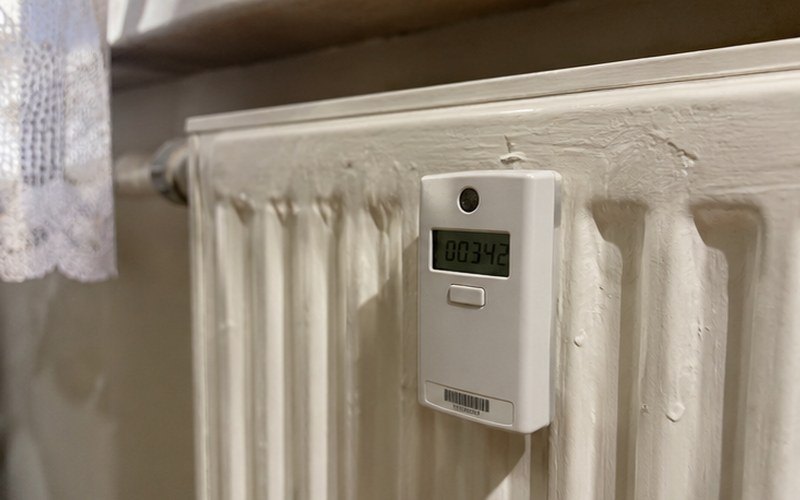
An allocator has to be fixed at a specific point on the radiator — usually at a set height and a set distance from the edges. This is not a question of appearance: the device measures surface temperature, and the wrong position gives the wrong result.
The second essential step is recording the radiator's parameters. The calculation uses the radiator's type, size and output — without those figures the allocator's reading cannot be converted correctly. So we note them down during installation and include them in the documentation.
The third thing is completeness. If some radiators in an apartment have allocators and others do not, the apportionment no longer reflects actual use. That is why installation is normally carried out on all radiators connected to the heating system at the same time.
An allocator system only works if it covers the entire building. If some apartments are not equipped, the apportionment of total consumption becomes inaccurate — and that produces exactly the disputes the system was introduced to avoid.
In practice this means installation across a building is a project with the same challenges as replacing meters: a schedule, resident notifications, repeat visits to the apartments where nobody was home, and consolidated documentation for the whole site.
How we run projects like these is described in the section on working with property managers. If the building's heat meter also needs sorting out at the same time, it is usually more sensible to plan both jobs together.
An allocator does not reduce heat consumption in itself, and it does not make heating cheaper. It is a metering tool, not an energy-saving device. What it does change is the principle of apportionment: the building's total bill is divided according to actual use, rather than by floor area alone.
For an apartment that uses less heating than the building's average, this is usually an advantage. For an apartment with higher consumption, the opposite. So the honest answer to "will this pay off for me" is that it depends on your actual consumption compared with everyone else's in the building.
The decision to introduce allocators in a building is normally taken jointly by the apartment owners, or by the property manager in line with the building's own arrangements. We carry out the technical work and prepare the documentation; questions about the calculation method and the building's arrangements are handled by the property manager.
We will get in touch within 5 minutes of you submitting the form
Your request has been received. We will contact you as soon as possible.