We replace old water meters with new ones in apartments, private houses and commercial properties. We select and deliver the meter — you do not have to buy anything.
A water meter is a mechanical device, and its accuracy changes over time. Replacement usually becomes relevant in one of these situations: the meter has reached the service life set by the manufacturer, its readings look implausible or do not match actual consumption, or the meter is visibly damaged, misted up, frozen or has a broken seal.
The second common situation is an instruction from your property manager or service provider saying the meter must be replaced or put in order. In that case there is usually a deadline as well, and it is worth acting in good time so that no questions arise about how your consumption is recorded.
The third situation is the choice between replacement and verification of your existing meter. Both routes are possible, and which one works out better depends on the age and condition of the meter. You can read more about this under verification arrangement.
We look at the existing meter assembly and meters, and assess the condition of the connections and shut-off valves.
We select a meter suited to your system and deliver it. You do not need to buy one separately.
We remove the old meter, install the new one and check that the connections are watertight.
As agreed, we seal the meter and prepare the replacement certificate with the readings.
In an apartment the meters are most often in the bathroom, the toilet or the kitchen — frequently behind an access hatch or a panel. There are usually two meters: one for cold water and one for hot. During the replacement the water supply is interrupted briefly in your apartment only. Once the work is done we record both the final readings of the old meter and the starting readings of the new one — this matters so that future billing is correct.
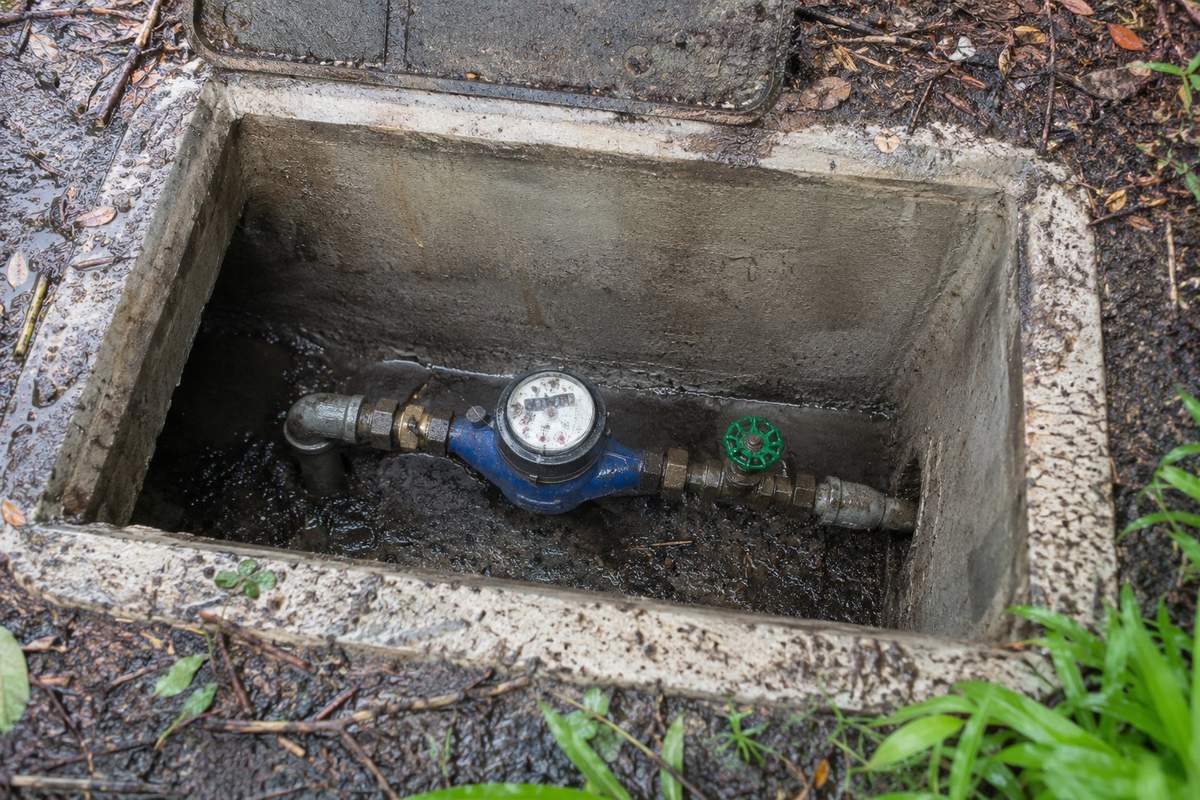
In a private house things are different. The meter may be in the utility room, in the basement or outside the house — in a meter well. A meter set in a well calls for a different approach, and sometimes you have to allow for damp or limited space. That is why in private houses we always start by assessing the situation before proposing a specific solution.
You fill in the form and tell us the property type and the number of meters. If you are not sure how many meters you have or exactly what you need, just say that you would like a consultation.
We get in touch, clarify the details and agree on a convenient time. This is not emergency work — we plan it so that it suits you.
We shut off the water supply, remove the old meter, install the new one and check that the connections are watertight and the meter works correctly.
As agreed, we seal the meter, record the readings and prepare the replacement certificate that can be submitted to your property manager.
To keep the work quick, it helps to have:
Meters rarely fail suddenly. Far more often they gradually start to measure inaccurately, and there are a few practical signs that give it away.
The readings do not change, or change too slowly. If your consumption has stayed the same but the meter shows considerably less than before, that usually means wear in the mechanism rather than a saving.
The dial is misted up or hard to read. Moisture under the glass means the housing is no longer sealed. A meter in that state usually has other problems too, which cannot be seen from the outside.
The meter turns when no water is being used. This almost always points to a leak in the system — most often in the toilet cistern. In that case the problem needs sorting out along with the meter.
There is damp or limescale around the meter. Dry white deposits on the connections mean water has leaked there at some point. It is worth having a look before it turns into a bigger problem.
The meter we remove remains your property, though in practice most customers have no use for it. Unless you tell us otherwise, we take the old meter away and dispose of it — it contains metal and plastic parts that do not belong in household waste.
There is one case in which the old meter is worth keeping: if there is, or might be, a dispute about previous bills. The meter is then the only physical evidence of what it was showing. If you think such a situation is possible, say so while we are working and we will leave the meter with you.
Apartments with a central hot water supply usually have two separate meters. They are not interchangeable: a hot water meter is built to work at higher temperatures, and a cold water meter will wear out far more quickly in those conditions.
So when you are planning a replacement, it is worth thinking about both. If they were installed at roughly the same time — which is typical — then the degree of wear will be similar too. If you replace only one, the other will most likely need attention before long, and that means another call-out.
Replacing both at once usually costs less than two separate jobs, because the journey, the preparation and the paperwork all happen once. It is not compulsory — if you only want one replaced, that is what we will do — but it is worth knowing when you make the decision.
This mostly affects private houses and unheated spaces — basements, outbuildings and meter wells. Frozen water expands and can crack both the body of the meter and the parts next to it.
If you suspect freezing, the most important thing is not to thaw it with a naked flame and not to try to force the water supply back on — either of those can turn minor damage into a burst and a flooded room. Close the shut-off valve if you can reach it, and describe the situation in your request.
We will get in touch within 5 minutes of you submitting the form
Your request has been received. We will contact you as soon as possible.