In Āgenskalns, wooden architecture and pre-war masonry houses mean that two apartments in the same building are rarely alike.
Āgenskalns is the historic heart of Pārdaugava, a district of wooden architecture, pre-war masonry houses and low-rise residential buildings. When it comes to water meter work, it is one of the most demanding neighbourhoods in Riga.
The reason is not the meter itself, but everything around it. In these historic buildings the water supply has often been rebuilt several times over the decades, and within a single building you can come across connections from completely different periods.
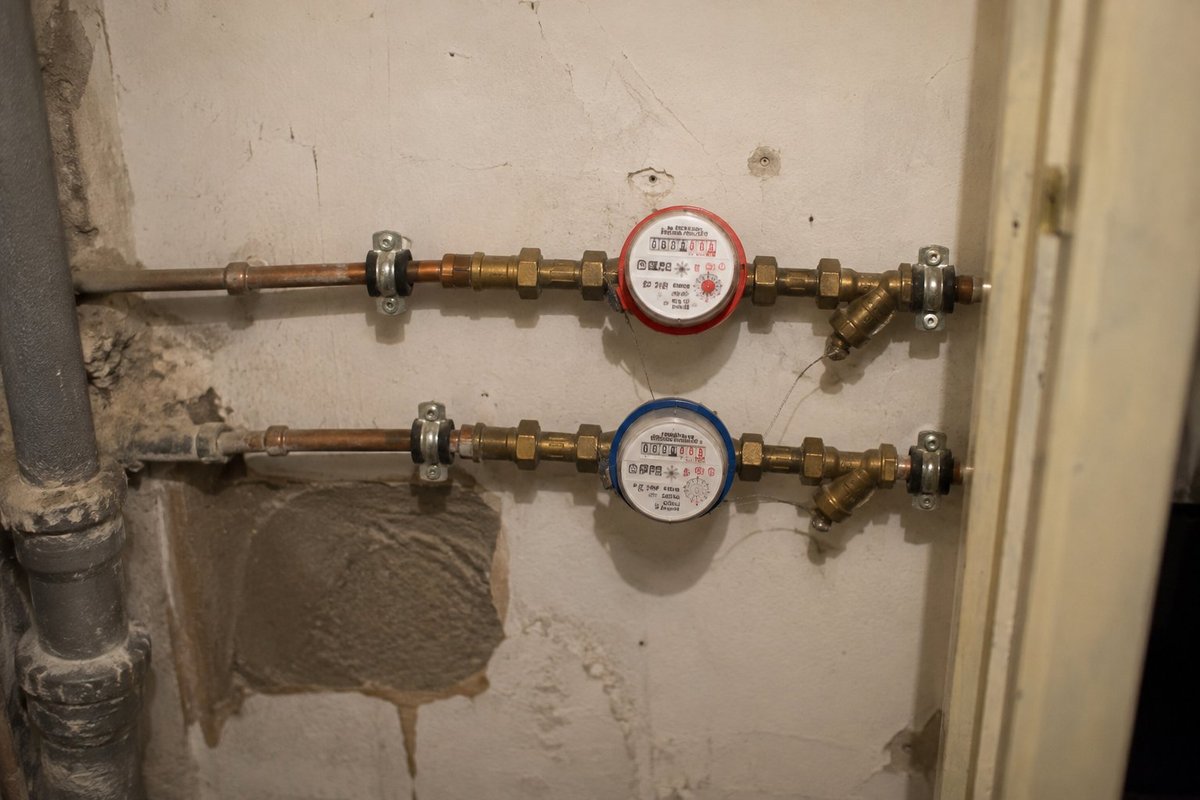
Wooden and pre-war housing. The systems have been rebuilt gradually. Two apartments in the same building can be entirely different, which makes a survey before the work almost essential.
Old pipes and connections. Limescaled or corroded connections mean that removal takes more care and sometimes additional work.
Shut-off valves. In older buildings the valve often no longer closes fully, and then the replacement also involves changing the valve.
Renovated properties. Some buildings have been refurbished, and there the meter assembly can be tidy and easy to reach — the opposite of the unrenovated building next door.
In Āgenskalns the service takes the specifics of historic housing into account. We supply the meter ourselves.
Owners of historic buildings. Often with a specific problem: damp, a fogged dial or a damaged seal.
Owners of renovated apartments. A planned replacement in a tidy meter assembly.
Property managers. Projects in historic buildings where every apartment needs an individual approach.
You send us a request, telling us the property type and the service you need.
We reply and agree on a time for the survey, which in Āgenskalns is almost always the first step.
We replace the meter, allowing for the fact that connections in a historic building can be unusual.
We seal the meter and prepare the certificate — in historic buildings that is particularly useful.
In Āgenskalns a survey before the work is not an extravagance but a necessity. A quote given without seeing the meter assembly tends not to match what a historic building reveals once the work starts — and we would rather tell you the real scope beforehand than add it to the invoice afterwards.
Many apartments in Āgenskalns are being renovated, and it is during renovation that the meter seal is most often damaged — usually by accident.
If you are planning bathroom or pipework renovation, warn the tradespeople about the seal. A damaged seal is not in itself a breach, but if left unresolved it can become an issue at exactly the moment you least expect it.
If the seal is already damaged, describe the situation in your request. During the survey we assess whether resealing is enough.
The most common question is whether a meter in a historic building can be replaced at all. Almost always it can — the only question is how much work it takes to sort out the connections.
The second question is about differences in price. In Āgenskalns these come not from the meter, but from the fact that an old assembly often needs the valve or a section of pipe replaced as well.
The third question concerns unheated spaces. If the meter assembly is somewhere that is not heated in winter, during the survey we also pay attention to the risk of freezing.
In the historic buildings of Āgenskalns the water supply is rarely all of one age. The original system, a Soviet-era rebuild and later repairs are often joined together in a single assembly, and each section has its own material and diameter.
In practice this means that removal can reveal a connection with no standard solution. It is not insurmountable, but it takes more time and sometimes additional parts.
That is exactly why a survey before the work is almost essential in Āgenskalns. It lets us state the real scope and price, rather than discovering it halfway through with the water already turned off.
In wooden housing the structure itself is rarely the problem — what matters more is the condition of the meter assembly and where it is. In older buildings the meter can be in an unheated hallway, in a basement or under a hatch in the floor.
If the assembly is in a space that is not heated in winter, that adds one more consideration: the risk of freezing. At properties like these, during the survey we look not only at the meter but also at whether the system is protected against the cold.
If you are not sure exactly where your meter assembly is, that is no obstacle to sending a request — during the survey we will find it and assess it together.
Neighbouring areas fall within the same call-out zone.
| Status | Riga neighbourhood |
| City | Riga |
| Location | Pārdaugava / left bank of the Daugava |
We will get in touch within 5 minutes of you submitting the form
Your request has been received. We will contact you as soon as possible.