Pļavnieki is a densely populated eastern housing district — one of the neighbourhoods where building-wide meter replacement comes up most often.
Pļavnieki is dominated by large Soviet-era residential estates. That means a great many apartments with similar meter assemblies and meters that were installed at roughly the same time.
In practice it is in neighbourhoods like this that building-wide replacement most often becomes relevant for property managers — not because one meter has failed, but because the same deadline is approaching for the entire building.
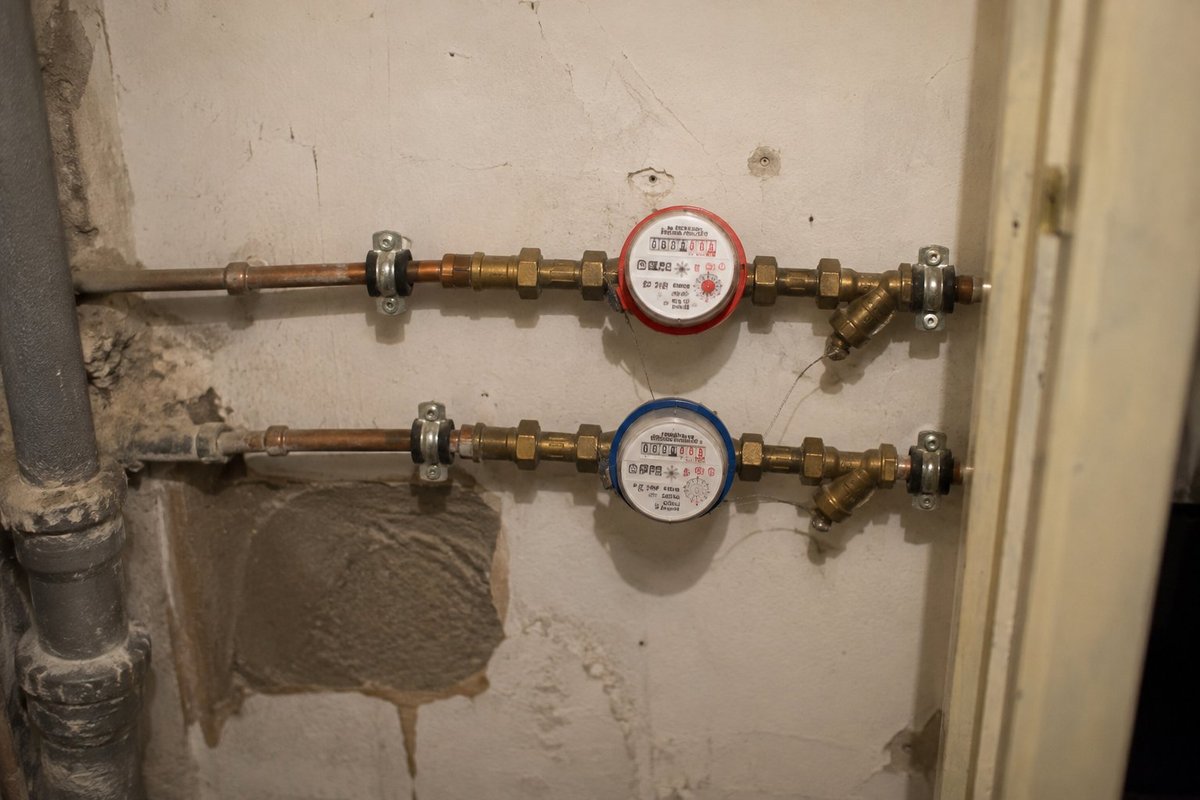
Large residential estates. Multi-storey buildings with several stairwells. It makes sense to organise the work riser by riser rather than by apartment number.
Uniform meter assemblies. The meters sit by the riser pipe, and the layout repeats. That makes the timing precise to plan.
Wear that falls due all at once. Meters installed in a single building age together, so a building-wide solution is often more practical than individual call-outs.
Access within the quarters. In the large blocks, getting the vehicle in and parking affect the planning of a visit more than the distance itself.
In Pļavnieki the service is available for a single apartment or for the whole building. The meter is included.
Property managers and building management companies. In Pļavnieki this is one of the most common forms of cooperation.
Apartment owners. Individual replacement, often ahead of the building's joint project.
Tenants and letting agents. Situations where it has to be agreed who orders the work.
You submit a request with a short description of the property and what you need.
We write back and confirm whether it is one apartment or wider work across the building.
We carry out the replacement; on building-wide work we go riser by riser to an agreed schedule.
We seal the meters; on a building scale we prepare a certificate for each apartment.
In Pļavnieki the biggest practical challenge in a building-wide project is not the installation but the doors that go unanswered. That is why we build the schedule with a repeat visit and offer residents individual time slots. At the end we hand the property manager a list of the apartments where the work was not done, along with the reason.
If a joint meter replacement is planned in your building, in practical terms it means three things. First, you will receive a notice with the date on which the work will take place on your riser.
Second, an adult will need to be at home to let the technician in and sign the certificate. It does not have to be the owner.
Third, if you cannot make the stated time, it is usually possible to arrange an individual visit. It is worth doing that straight away rather than waiting for the second pass.
The most common question is whether to wait for the building's joint replacement or act independently. If the project has been announced and the date is known, it is often worth waiting. If there is no date, or the meter is already causing trouble, waiting achieves nothing.
The second question comes from property managers: how realistic it is to reach every apartment. The honest answer is that you never manage all of them on the first pass. That is why we plan a repeat visit into the schedule.
The third question is about the water being switched off during building-wide work. Working riser by riser, the shut-off happens once per riser and at a predictable time, rather than repeatedly.
In Pļavnieki's large buildings the technical side is the easy part. Replacing a meter in one apartment takes half an hour, and a hundred apartments is simply a hundred half-hours — in theory.
In practice the hard part lies elsewhere. Some residents are at work and not at home. Some apartments are let out and the owner lives elsewhere. A few simply do not open the door. A project that does not plan for this shifts the problem onto the property manager.
Our approach is to plan at least one repeat pass and to offer residents the option of arranging an individual time — that is our practice. For those who remain unreached, the property manager receives a specific list of apartments and the reason — not a vague note saying "some were not at home".
Pļavnieki buildings have several stairwells and a great many apartments. If the work is planned by apartment number, the water has to be shut off several times and in different places, and residents lose their supply more often than they should.
Working riser by riser changes that. In a single pass we cover every apartment connected to one riser pipe, and the water is shut off once and at a predictable time.
For the property manager that means fewer calls from residents. For residents it means clear information about exactly when the work will reach their riser.
The neighbouring areas fall within the same service territory.
| Status | Riga neighbourhood |
| City | Riga |
| Location | Right bank of the Daugava / eastern or northern Riga |
We will get in touch within 5 minutes of you submitting the form
Your request has been received. We will contact you as soon as possible.